Showing posts with label colour wheel. Show all posts

Sunday, 30 March 2014

More Colour wheels and templates - mixing opposites to create neutrals


Colour wheels take a bit of drawing up, especially as they get more complicated. I use a compass with an ink ruling pen adapter to draw them, and I like to leave a bit of space between each section so the paint doesn't run together.

Here are a couple you may like to choose from to try doing yourself. Each has 18 spaces around the outside. There is no need to have 18 tubes of paint to create these outside colours - it can be done with 8 or less placed carefully at the appropriate place around the circle and then mixed together in different ratios to create the secondary colours in between.

There is a link to the jpeg on my website here so you can download and print it onto watercolour paper and paint is with your own paints.

This one was painted using a small palette of two yellows (Quinacridone Gold and Hansa Yellow Medium), Phthalo Green, Two blues (Phthalo Blue GS and Ultramarine) and three reds (Quinacridone Rose, Pyrrol Crimson and Pyrrol Scarlet. The other reds, oranges, purples, green and turquoise around the outside were all painted with these pigments, then the opposite colours mixed together to create the tertiaries through the middle.

18 colour wheel with 8 mixed opposites creating dozens of neutrals.

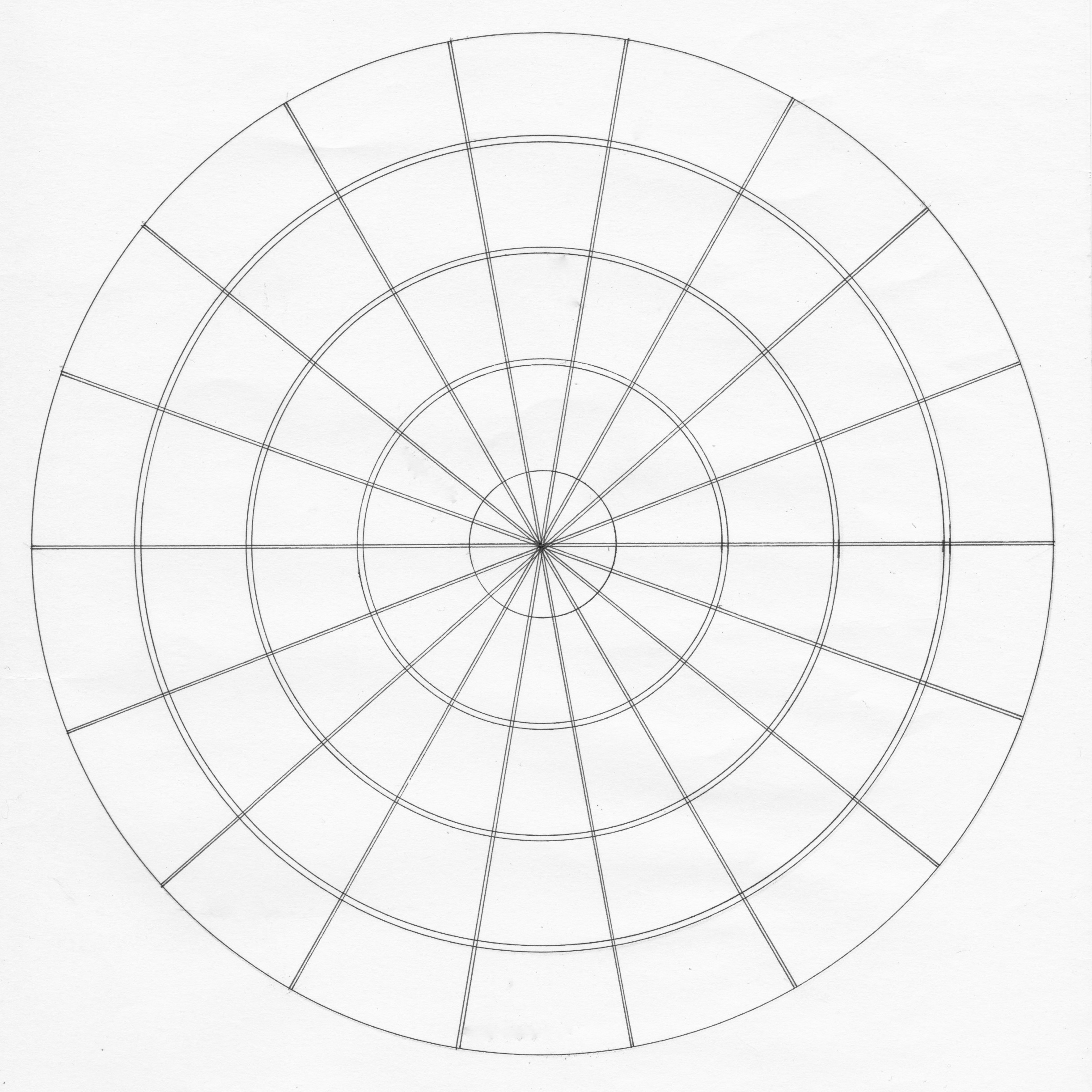
Template for 18 colour wheel with 8 mixed opposites
Here is the template for the wheel above - it has 18 colours around the outside and space to mix 8 tertiaries  through the middle section.

Click here to see more about it in my website, or here to link to a jpeg that you can print.


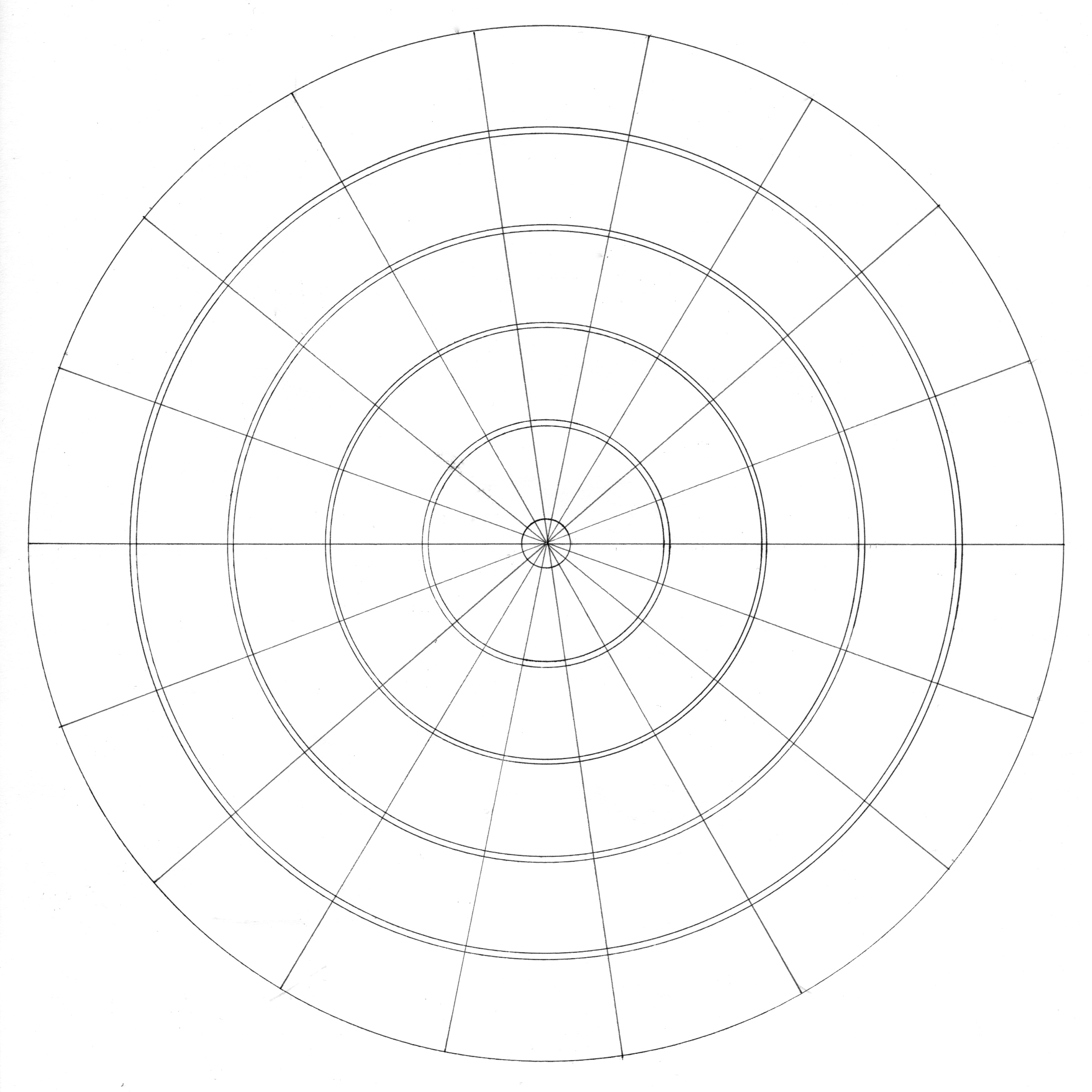
Template for 18 colour wheel with 6 mixed opposites


This version is a little simpler as it has less spaces for the opposite mixtures through the middle.

To print this one click here.

Saturday, 29 March 2014

Warm and Cool Primary colour wheel with template


Template for warm and cool red, yellow and blue
mixes wheel.

Colour wheels can take a bit of drawing up, but can be a great way to learn about your colours. This colour wheel allows you to see the green, purple and orange secondary colours you can make by mixing just 6 primary colours together in separate pairs.

You need a warm and a cool yellow, a warm and a cool blue and a warm and a cool red. It is helpful if your red is a rose or magenta or carmine colour that washes down to a pink so you can create lovely clear purples. It is also helpful if your yellows are not too close together - one a lemon or mid yellow, the other more on the orange side. Decide whether you are going to follow the key on the left as I have below or the key on the right and stick to it throughout.

Paint your primary colours into their labelled sections, then begin to mix each pair as they sit around the circle, adding a little of one colour to the other as you gradually move around the circle. For example, you may start at the top with Y1 and mix a little R2 and paint the next section, then add a little more R2 and paint the next section and so on. Or start my mixing an orange that sits equally between Y1 and R2 and paint that in the middle first.

Mine below is created using

  • Y1 Quinacridone Gold, Y2 Hansa Yellow Medium
  • R1 Pyrrol Scarlet, R2 Quinacridone Rose
  • B1Ultramarine Blue, B2 Phthalo Blue RS

Warm and Cool red yellow and blue colour wheel.
There is more information on this chart on my website here, or just click here to link to a jpeg so you can print this onto watercolour paper and have a go.

Once you've done this you will have a great understanding of how six of your colours mix in pairs. Notice how the warm red and cool blue don't make purples but interesting red earth hues - very useful! And the warm yellow and warm blue make the most dull but often realistic greens.

Next perhaps explore what would happen if you add a bit of red to you bright greens.