Showing posts with label mixing greys. Show all posts

Thursday, 28 August 2014

Colour exploration - a single pigment colour wheel


My sketch books have been busy!

Below is a colour wheel painted out in only single pigment colours. Some are not quite ideal, and not all are necessary, but an interesting exercise to do.

  • Ultramarine Violet in the 5.30 position is very weak in Daniel Smith. Another brand may be better, though it is a weak tinting pigment. Try Da Vinci or perhaps QoR.
  • Amethyst Genuine could go in the 5.30 spot instead, but is very dark and neutralised. 
  • Indanthrone Blue in the 4.30 position is also a neutralised blue. 
  • Cobalt Turquoise in 2.30 is not as bright and powerful as a mix of Phthalo blue and Phthalo green would be, and is more opaque and granulating but I love it!  Amazonite genuine is a more transparent alternative.
  • Cobalt Green in 1.30 would be better replaced with phthalo green YS.
  • In the 11.30 position I have placed New Gamboge, but have mixed Quinacridone Gold below as that's my favourite warm yellow.
  • Quin Rose in 7.30 could equally be Quin Magenta PR122. They are different but are both used as a cool clean mixing red for making purples.
Notice the two triangles in the middle connect the primary triad Hansa Yellow Medium, Ultramarine and Pyrrol Crimson and the secondary triad Benzamida orange, Phthalo Green and Carbazole Violet. Together they make fantastic 6 colour palette seen here.


Each of these pairs opposite each other on the wheel neutralise each other to a grey or black, creating a huge range of earth and tertiary colours, with the exception of the yellow greens and the red purples.

Here they are painted out in pairs.


3 - lovely deep greys

12 - don't neutralise each other to grey. good for orchids!


1 makes raw umber hues

2 neither ultramarine violet nor Smalt a perfect combination. Try amethyst?

4 Lovely orange earth colours


5 Indigo and red earth hues


6 Orange earth hues


7 Indian red and venetian red hues


8 Deep greens and greys

9 Black, grey, plum, aubergines

10 Lovely purples and deep greens


11 not so interesting.


I don't tend to work with a palette of pure bright colours as I love the earth pigments, but it's fascinating to see where they all fit into the palette.


Sunday, 30 March 2014

More Colour wheels and templates - mixing opposites to create neutrals


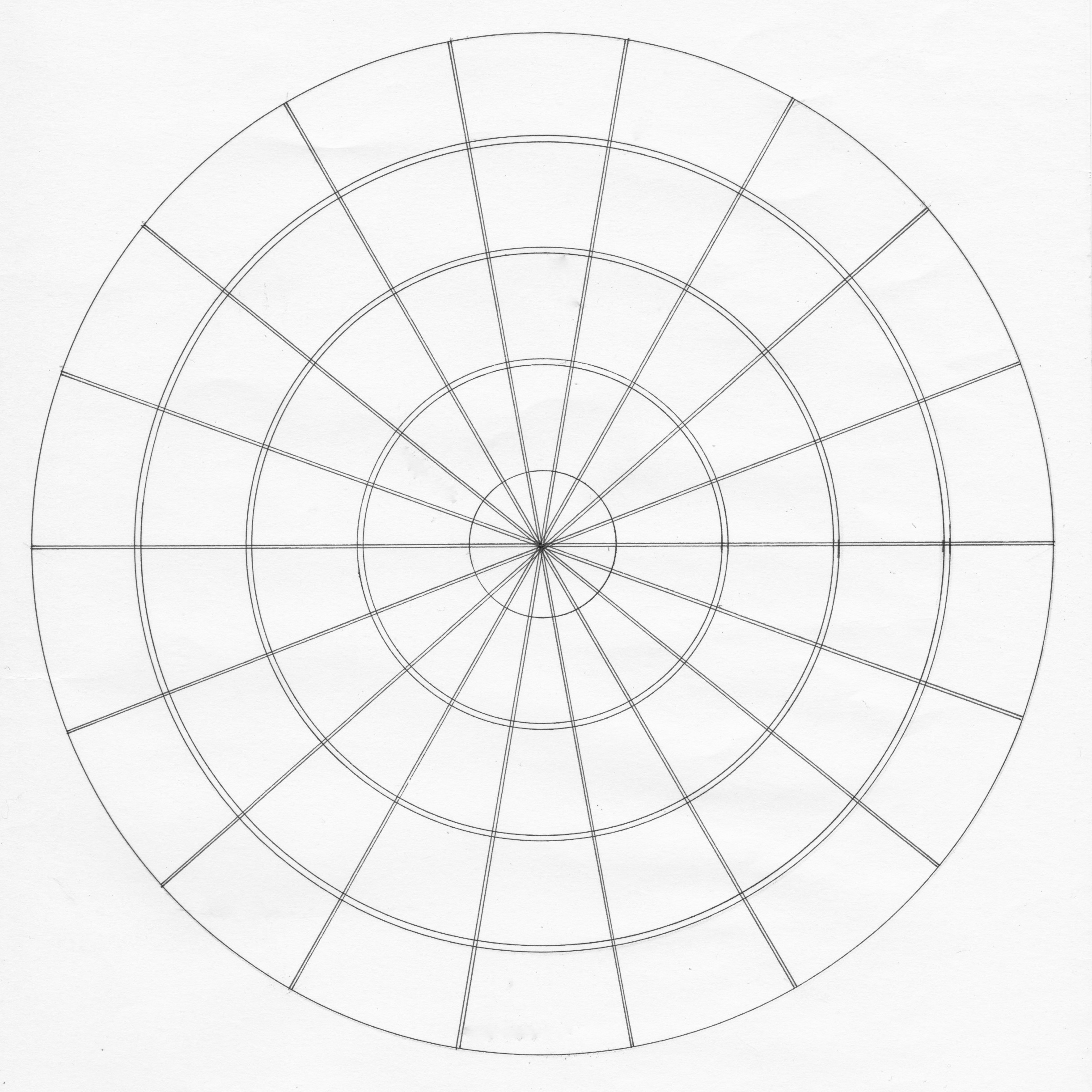
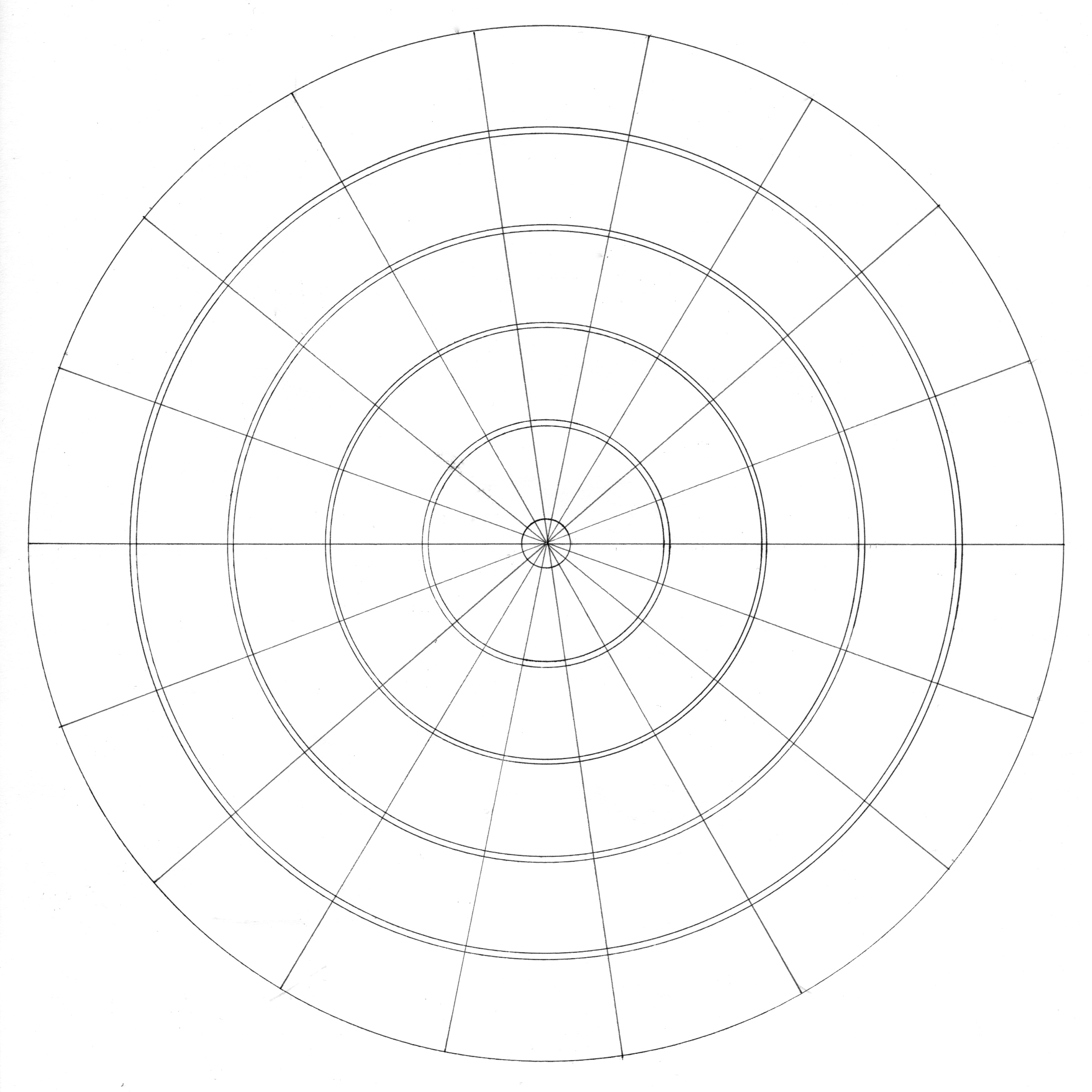
Colour wheels take a bit of drawing up, especially as they get more complicated. I use a compass with an ink ruling pen adapter to draw them, and I like to leave a bit of space between each section so the paint doesn't run together.

Here are a couple you may like to choose from to try doing yourself. Each has 18 spaces around the outside. There is no need to have 18 tubes of paint to create these outside colours - it can be done with 8 or less placed carefully at the appropriate place around the circle and then mixed together in different ratios to create the secondary colours in between.

There is a link to the jpeg on my website here so you can download and print it onto watercolour paper and paint is with your own paints.

This one was painted using a small palette of two yellows (Quinacridone Gold and Hansa Yellow Medium), Phthalo Green, Two blues (Phthalo Blue GS and Ultramarine) and three reds (Quinacridone Rose, Pyrrol Crimson and Pyrrol Scarlet. The other reds, oranges, purples, green and turquoise around the outside were all painted with these pigments, then the opposite colours mixed together to create the tertiaries through the middle.

18 colour wheel with 8 mixed opposites creating dozens of neutrals.

Template for 18 colour wheel with 8 mixed opposites
Here is the template for the wheel above - it has 18 colours around the outside and space to mix 8 tertiaries  through the middle section.

Click here to see more about it in my website, or here to link to a jpeg that you can print.


Template for 18 colour wheel with 6 mixed opposites


This version is a little simpler as it has less spaces for the opposite mixtures through the middle.

To print this one click here.